By Judie Brown
In a recent column, Father Jerry Novotny, OMI, wrote:
If I am made in the image of God, my worth cannot be reduced to success, usefulness, beauty, or productivity. A bank account, a job, or public approval do not determine my worth. Dignity isn’t earned – it’s built in and stays with me. When I envision a homeless person shivering through a cold night, a prisoner reduced to a number, an elderly person watching memories fade, or an unborn child utterly dependent on others, I recall that each one bears the mark of God. This mark alone gives every life a dignity beyond anything society could possibly conceive.
These words define not only the value of the human person but the essence of what it means to be a person. Without respect for human dignity, one is just another member of the animal kingdom, no more and no less.
Thus, as pro-life people we concern ourselves with this truth and with the value the Beatitudes have in our work of saving lives and souls for God.
The Catechism of the Catholic Church tells us that “the Beatitudes reveal the goal of human existence, the ultimate end of human acts: God calls us to His own beatitude.” It goes on to say that “this vocation is addressed to each individual personally, but also to the Church as a whole, the new people made up of those who have accepted the promise and live from it in faith.”
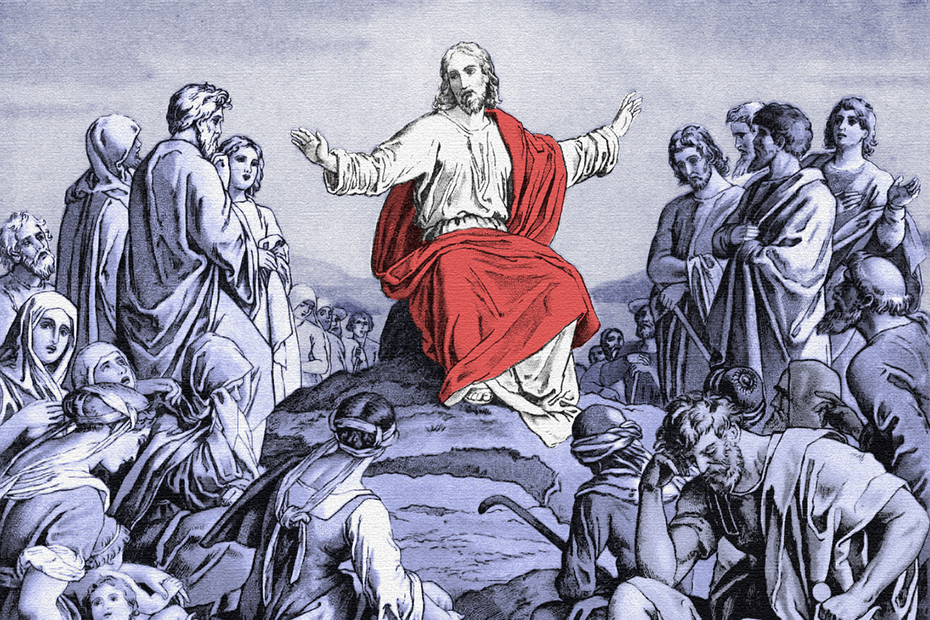
From an early age, Catholic students learn the meaning of Christ’s words to His followers during this Sermon on the Mount speech. And in a description of the Culture of Life Studies Program’s lesson booklet on the Beatitudes, we read, “Through these teachings about who is considered blessed, children will learn that even when life may seem or feel difficult, Jesus walks with us, cares for us, and loves us. This lesson helps children see others through Jesus’ eyes and teaches them ways to build a culture of life by caring for those in need or who may be hurting because of how someone has treated them.”
These are crucial lessons for children to learn. Yet in order to reinforce these teachings, we must remind ourselves constantly that there is never a time when the Beatitudes are not integral to our lives as followers of Christ, especially in our efforts to defend vulnerable persons.
There are so many abuses to contend with in this chaos known as the culture of death. They go far beyond abortion and euthanasia, touching on child trafficking, surrogacy, in vitro fertilization, and the entire panoply of ways in which the human being can be used, abused, and murdered. Specifically, I want to address surrogacy.
The Congregation for the Doctrine of the Faith explained in Donum Vitae that a surrogate mother is “the woman who carries in pregnancy an embryo implanted in her uterus and who is genetically a stranger to the embryo because it has been obtained through the union of the gametes of ‘donors.’ She carries the pregnancy with a pledge to surrender the baby once it is born to the party who commissioned or made the agreement for the pregnancy.”
Father Jerry has written about surrogacy, saying that it is a form of human trafficking because “trafficking in the context of surrogacy means recruiting, moving, or controlling women through force, deception, or exploiting their poverty to make them provide some type of work.” He continues, “This can include pressuring them into pregnancy, moving them across borders to avoid regulation, withholding clear consent, or treating children as goods to be bought and sold.”
In a sense, this is the ultimate commodification of the human person. Coercing a woman, whether through monetary or other means, to carry someone else’s child is a heinous expression of disrespect to the human person.
Similar to abortion and euthanasia in so many ways, surrogacy disregards the dignity of the woman who carries someone else’s baby and sees her merely as a receptacle whose womb has been rented for the purposes of childbearing. No wonder Father Jerry calls this a type of human trafficking!
This situation, like every other, commends us to pay close attention the Beatitudes, drawing from these words the grace to serve as beacons of hope to those who are suffering from the ravages of the culture of death.
May the Beatitudes guide us to shine that same light on every person from her first second until her last, never compromising but always affirming that life is a gift.
Visit the CLSP website to download a copy of the Beatitudes lesson booklet for your home. For a limited time, it’s on sale for half off!