By Fr. Shenan J. Boquet
“As we begin Respect Life Month, together we embrace the words of Pope Leo XIV, ‘How important it is that each and every baptized person feel himself or herself called by God to be a sign of hope in the world today.’ Each of us is called to be a witness to the Gospel of Life, proclaiming in word and deed the innate goodness and dignity of every human person.”
― Bishop Daniel E. Thomas, Chairman, USCCB Committee on Pro-Life Activities
October is once again Respect Life Month, a time the U.S. bishops set aside each year to remind the faithful of the dignity of every human life. However, for me this year’s Respect Life Month is especially meaningful, since this year we mark the 30th anniversary of St. John Paul II’s great encyclical Evangelium Vitae (The Gospel of Life).
I don’t think it’s an overstatement to say that the publication of Evangelium vitae was one of the most important events in the history of the pro-life movement. The landmark encyclical is nothing less than a comprehensive manifesto for the movement. Not only does it provide a robust and comprehensive philosophical and theological defense of the pro-life worldview, but also a clarion call to effective action.
Renewing the Culture of Life
Far from being a relic of the 1990s, Evangelium vitae reads almost like it was written for 2025. In the document, St. John Paul II warned of a “conspiracy against life” that manifests itself in abortion, euthanasia, artificial reproduction, and other assaults on human dignity, all of which are linked together and are all the fruit of the same rotten tree.
In their statement for Respect Life Month 2025, the U.S. bishops urged U.S. Catholics to recognize the growing assaults against the sanctity of life. “The daily headlines remind us of how desperately our world is thirsting for the hope that only God can provide,” said Bishop Daniel E. Thomas, Chairman of the USCCB Committee on Pro-Life Activities.
Every day we witness the overwhelming disregard for human life: through rising rates of abortion and assisted suicide; the killing of innocent school children, even at prayer; the mistreatment of our immigrant sisters and brothers as they endure an environment of aggression; and political and ideological violence inflicted against unsuspecting victims. These attacks threaten life precisely when it is most vulnerable and in need of protection.
John Paul II’s Warning
When Evangelium vitae was first issued in 1995, it was striking for its comprehensive vision. St. John Paul II was not content to single out abortion or euthanasia in isolation. Instead, he saw them as part of a larger mentality. At its root, he argued, the “culture of death” arises when human beings see themselves not as creatures with a dignity bestowed upon them by God, but as autonomous masters of life and death. When autonomy is raised above the sanctity of life, the strong inevitably impose their will on the weak.
He contrasted this with the “culture of life,” which recognizes that life is sacred because it is created by God and entrusted to us. “In giving life to man,” he wrote, “God demands that he love, respect, and promote life. The gift thus becomes a command, and the command is itself a gift” (no. 52).
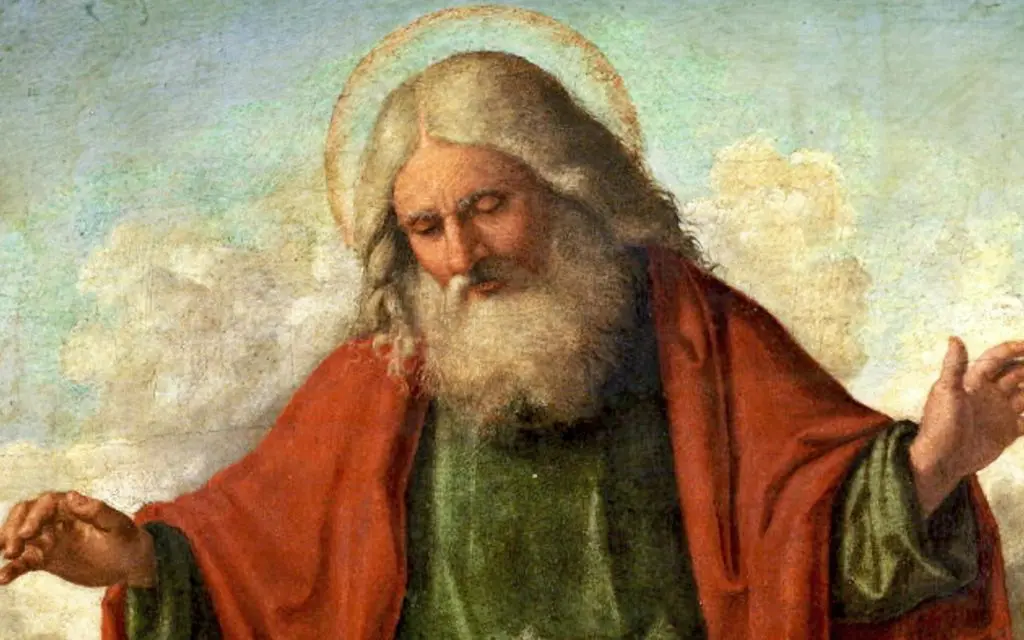
“Man, as the living image of God, is willed by his Creator to be ruler and lord,” he said. Given this, “man is not the absolute master and final judge, but rather – and this is where his incomparable greatness lies – he is the ‘minister of God’s plan’” (no. 52).
This is where the culture of death turns everything on its head. “Non serviam.” I will not serve. These are the words that are traditionally attributed to Satan. They encapsulate the Satanic commitment to rebellion as a way of life. And this, in turn, is the mentality at the very heart of the culture of death.
‘Freedom to Choose’ Becomes a Prison
We must have a “freedom to choose” proclaim the pro-abortion activists. Patients should have the “freedom to die,” say the euthanasia activists. Couples, including homosexual couples, should have the “freedom” to create human beings in a petri dish (in vitro fertilization), select the “best” ones, and then pay a surrogate to carry their child. Gender-confused individuals must have the “freedom” to mutilate their bodies, pretending to be the opposite gender. And on and on it goes.
However, as we are learning, freedom without limits is not freedom at all: instead, freedom becomes a cage, in which individuals and the broader culture find themselves increasingly confined within the claustrophobic prison of their worst passions and desires. Rather than calling men and women to greatness, the culture of death promises them ease, at the cost of their dignity, and the rights and dignity of the most vulnerable among us.
The Spread of the Culture of Death
In 1995, abortion was already widespread. However, euthanasia was legal only in a handful of places. Today, assisted suicide and euthanasia are spreading across Europe and North America, with ever-expanding criteria.
Technologies that seemed futuristic at the time —such as cloning, gene editing, and artificial wombs — are now real frontiers in laboratories. The surrogacy industry has become global, with children bought and sold across borders as if they were merchandise.
What St. John Paul II called out as an excessive focus on “efficiency” has seeped into every corner of bioethics, where the question too often is not whether a practice respects human dignity, but whether it is technologically possible and economically profitable.
As suggested above, one of St. John Paul II’s most important contributions was to show that contraception, abortion, euthanasia, surrogacy, and cloning are not separate, unrelated issues but interconnected symptoms of the same underlying error. They all flow from a vision of human beings as disposable, malleable, and subject to the will of others.
This is why we see that many of the countries that originally legalized abortion, are among the first to legalize euthanasia and assisted suicide, as well as reproductive technologies. Once the principle of inherent dignity is abandoned, the logic of the market and of personal autonomy quickly fills the void.
This is why the Church insists that we must resist each and every assault on life, not just the ones that are politically convenient. To accept abortion but oppose euthanasia, or to oppose abortion but embrace artificial reproduction, is to miss the underlying unity of the culture of death.
The Next Frontiers of the Culture of Death
In recent years, the popes have also drawn our attention to the issue of capital punishment. While the Church has traditionally taught that the death penalty can be used in certain, circumstances, St. John Paul II suggested that such circumstances are vanishingly rare in modern society. Furthermore, he wrote that the growing opposition to capital punishment is to be welcomed as suggesting a growing awareness of the value of life, even the life of those who may have forfeited their life by perpetrating horrific crimes.
As the sainted pope wrote, the death penalty should not be used “except in cases of absolute necessity: in other words, when it would not be possible otherwise to defend society.” “Today,” he added, “as a result of steady improvements in the organization of the penal system, such cases are very rare, if not practically non-existent” (no. 56).
Perhaps the single issue that St. John Paul II’s far-seeing mind did not foresee was the rapid assault on reality of biological gender. However, he certainly recognized the perverse philosophical principles that would lead to this extraordinary situation. Within the culture of death, he wrote, “the body is no longer perceived as a properly personal reality, a sign and place of relations with others, with God and with the world. It is reduced to pure materiality: it is simply a complex of organs, functions and energies to be used according to the sole criteria of pleasure and efficiency” (no. 23).
Respect Life Month: A Time for Action
Thirty years after the publication of Evangelium vitae it can be easy to get discouraged at the inroads made by the culture of death.
On the one hand, in the United States, we can celebrate the fact that Roe v. Wade is no longer the law of the land. And we can celebrate recently-released statistics that suggest that the U.S. is experiencing a significant drop in abortion rates in 2025, after several years of increasing numbers.
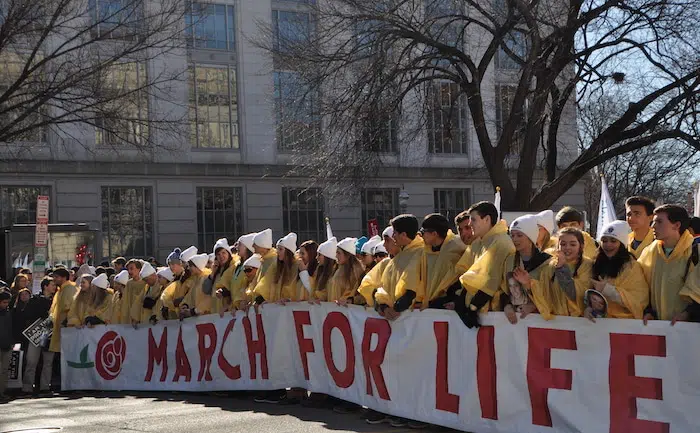
And yet, in the years since Evangelium vitae we have seen euthanasia rapidly expand, inhuman reproductive technologies become lucrative, massive-scale industries, and pro-abortion activists make inroads into some of the last remaining pro-life jurisdictions in the world, including Ireland, some South American nations, and in Africa.
However, St. John Paul II’s encyclical, although candid in making predictions about the destructive spread of the culture of death, was never a document of despair. It was a proclamation of hope. The Holy Father concluded Evangelium vitae with a call to hope, reminding the Church that “a great campaign in support of life is urgently needed” (no. 95). That campaign, he said, is not only political but spiritual. It begins in prayer and in the daily choices of individuals and families to live differently.
How Parishes Can Build a Culture of Life
To help Catholics participate in this “great campaign” during Respect Life Month, the USCCB has provided a wonderful Respect Life Month “Action Guide“ for parishes. The Guide provides a detailed blueprint for how parishes can educate their parishioners and motivate them to make a real difference in the battle to defend life.
The U.S. bishops first urged parishes to put up Respect Life posters at the very start of the month of October. And then, on the first Sunday of October, which is designated Respect Life Sunday, they suggested that parishes have a Respect Life booth at the parish. The USCCB also urged priests to preach about respect for life on Respect Life Sunday. For priests who needed some help in formulating their homilies, they provided some suggested talking points and language.
Finally, the USCCB is organizing a nation-wide novena for the intention of protecting the human life from conception to natural death. You can find the prayers of the novena here. It is scheduled to run from October 22nd to 30th, to close out the month.
Every Catholic Can Make a Difference for Life
I am truly delighted to see the USCCB taking the issue of defending life so seriously. The pro-life office at the USCCB is doing its part in ensuring that every parish in the country has everything they need to make defending life as easy and straight-forward as possible.
Imagine if every parish in the country took the U.S. bishops up on their invitation? Imagine the millions of people who would hear the Gospel of Life preached courageously from the pulpit? Imagine the millions of people who would be challenged to step up and defend life. If even a fraction of the Catholics in the United States took some part of the Respect Life message to heart, we could usher in a cultural change in no time at all!

I urge you to look through the USCCB “Action Guide,” and, if your parish does not have any Respect Life events scheduled, why not volunteer to help out? Too often it is our complacency that allows the culture of death to spread. The Catholic Church is the largest religious body on earth. If even a small percentage of the 1.4 billion Catholics actively promoted the culture of life as St. John Paul II exhorted, the world would look very different in a short period of time.
This article has been reprinted with permission and can be found at hli.org/2025/10/respect-life-month-2025-the-message-of-evangelium-vitae.