By Susan Ciancio
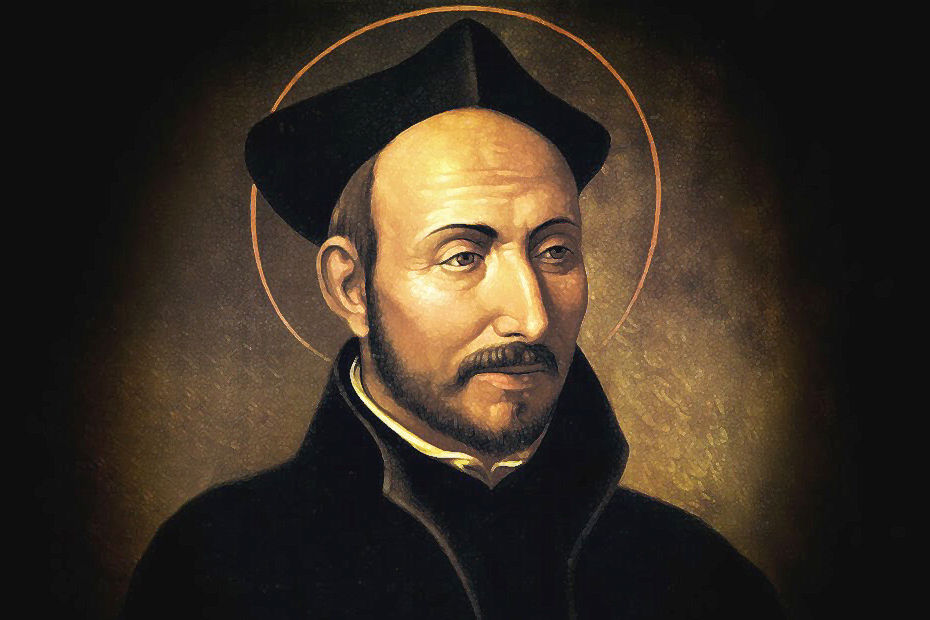
On July 31, we celebrate the feast of a man whose life drastically changed because of a cannonball, a man whose life is proof that God helps us turn tragedies into blessings, if we are open to His assistance.
St. Ignatius of Loyola was born in Spain in 1491. As a child and young adult, he had big dreams—dreams of becoming a knight, serving the king, and fighting in battles. And for a while, he did just that as an officer in the military. But during the Battle of Pamplona, a cannonball ricocheted off the wall of the citadel that he and his fellow military men had taken refuge in. The cannonball hit him, shattering his right leg and badly injuring his left.
As he lay in bed recuperating, Ignatius asked for books about knights and stories of gallantry, but there were none available. Instead, he was given books about the life of Christ and about the saints. He began to read voraciously, and he realized that the dreams he had had about the life he thought he wanted left him unfulfilled. Yet the dreams he had about following Christ left him filled with joy.
Ignatius became a changed man, no longer wanting to serve an earthly king but a heavenly one. He decided to go on a pilgrimage to the Holy Land to walk where Jesus walked. On his way, he gave his expensive clothes to a poor man, and he stopped at a town called Manresa, where he planned to stay just a few days. He ended up staying 10 months in prayer and discernment.
He eventually made it to the Holy Land, but he remained only a short time. He returned to Spain and learned enough Latin to then enroll at the University of Paris. There he met Francis Xavier and Peter Faber, who shared a similar passion for spreading the gospel. Together, these three would form the order known as the Society of Jesus, or the Jesuits.
St. Ignatius told us to “go forth and set the world aflame.” We cannot do that without a knowledge of our faith and a deep love of God. That’s why the Culture of Life Studies Program recently created two incredible lessons about St. Ignatius—one for middle school and one for high school. In both of these lessons, students can learn not just about St. Ignatius but about the Ignatian concept of cura personalis—care for the whole person (heart, soul, mind, and body).
St. Ignatius: Loving and Caring for the Whole Person is a one day lesson booklet that teaches middle schoolers about the life of St. Ignatius and explores how to apply the concept of cura personalis to their own lives.
St. Ignatius: Cura Personalis is a two-day lesson booklet for high schoolers that teaches the importance of caring for the whole person. The first lesson challenges students to care for themselves by caring for their whole person. The second lesson teaches students the importance of cura personalis toward others and debunks the lie of the “you do you” mentality. Through readings, discussion, and thought-provoking activities, teens will come to understand the importance of caring for a person, both body and soul.
Both lessons are vital for students’ faith formation in today’s culture. As parents and educators, it is our responsibility to teach the young people in our lives how to not only care for themselves but how to care for others. This is cura personalis in action, and it’s a crucial part of building a culture of life.
Ignatius once said, “I shall not only be called a Christian, but also prove to be one.” What he meant by that was that he would live as a Christian so that others could see and emulate his behaviors. In doing so, he would lead others to Christ.
This is also our charge. Every action we take should glorify God, and everything we do should lead others to Him. So let us heed Ignatius’ words and not only “go forth and set the world aflame” but teach the young people in our lives to do so as well.